
The Ultimate Guide to Professional Haircutting Shears
Everything Professional Stylists and Barbers Need to Know Before Investing in Haircutting Shears
A professional haircutting shear is much more than a tool. It is an extension of the stylist's hand. The quality of your shears affects precision, comfort, efficiency, and ultimately the quality of every haircut you perform.
Whether you're a new stylist purchasing your first professional shears or a seasoned barber looking to upgrade your toolkit, understanding what separates an average shear from an exceptional one can save you money, reduce physical strain, and improve your results behind the chair.
This comprehensive guide will explain everything you need to know about professional haircutting shears, including steel quality, blade types, handle designs, ergonomics, sizing, maintenance, and how to choose the right shears for your cutting style.
Why Professional Haircutting Shears Matter
Many stylists spend years perfecting their craft but overlook the importance of the tools they use every day.
A quality shear provides:
-
Greater cutting precision
-
Improved control
-
Reduced hand fatigue
-
Cleaner cutting lines
-
Longer edge retention
-
Better client experience
-
Increased career longevity
The right shears won't make someone a great haircutter, but poor-quality shears can certainly limit even the most skilled professional.
Understanding Haircutting Shear Steel
One of the most important factors in shear performance is the quality of steel used during manufacturing.
The steel determines:
-
Sharpness
-
Durability
-
Edge retention
-
Corrosion resistance
-
Overall lifespan
440C Stainless Steel
440C remains one of the most widely used steels in professional shears.
Benefits:
-
Excellent edge retention
-
Good corrosion resistance
-
Affordable price point
-
Easy maintenance
Ideal for:
-
New professionals
-
Barbers
-
Daily salon use
VG-10 Steel
VG-10 is a premium Japanese steel known for exceptional hardness and sharpness.
Benefits:
-
Superior edge retention
-
Extremely sharp cutting performance
-
Long service life
Ideal for:
-
Precision cutters
-
Advanced stylists
-
Premium shear collections
ATS-314 Steel
Considered by many professionals to be among the finest steels available for haircutting shears.
Benefits:
-
Exceptional durability
-
Outstanding sharpness
-
Long-term performance
Ideal for:
-
Career professionals
-
Heavy daily use
-
Premium cutting systems
Choosing the Right Shear Size
One of the most common mistakes professionals make is purchasing the wrong shear length.
5.0" - 5.5" Shears
Best for:
-
Precision cutting
-
Detailed work
-
Smaller hands
-
Bobs and technical shapes
For professionals who prefer a shorter shear for detailed work, the Artisan Precision 5.5 was purpose-built for control and accuracy. Its compact 5.5-inch slim sword blade makes it an excellent choice for precision cutting, detailed sections, perimeter work, and techniques where precise blade placement matters.
5.75" - 6.0" Shears
Best for:
-
All-around salon work
-
Layering
-
Point cutting
-
Versatile cutting techniques
Most professionals find this range to be the ideal balance between control and efficiency.
For professionals looking for a versatile everyday cutting shear, the Artisan Origin 6.0 features a purpose-built wide blade designed for both wet and dry haircutting. Its combination of strength, control, and versatility makes it an excellent foundation shear for professionals who perform multiple cutting techniques throughout the day.
6.5" - 7.0" Shears
Best for:
-
Barbering
-
Scissor-over-comb work
-
Large sections
-
Long hair cutting
These longer shears increase efficiency and reduce the number of cutting motions required.
Professional hairstylists and barbers who use multiple cutting techniques may benefit from building a shear system rather than relying on one shear for every haircut. The SHEARPOLICE® Artisan Collection was developed around this philosophy, with specialized professional shears for precision cutting, versatile wet and dry cutting, shear-over-comb, and creating different types of texture and movement.
For professionals who regularly perform shear-over-comb or prefer the efficiency of a longer blade, the Artisan Sculptor 6.75 combines blade length, strength, and cutting power. It was designed for efficient shear-over-comb work, barbering, larger cutting sections, and techniques where additional reach and cutting power are an advantage.
Convex Edge vs Beveled Edge
Understanding blade geometry is critical when selecting professional shears.
Convex Edge
A convex edge features a highly polished, razor-sharp cutting surface.
Advantages:
-
Smooth cutting action
-
Superior precision
-
Excellent for slide cutting
-
Ideal for advanced techniques
Preferred by many professional stylists.
Beveled Edge
A beveled edge includes a slight angle along the blade.
Advantages:
-
Increased durability
-
Easier maintenance
-
Excellent for barbering
-
Ideal for beginners
Preferred by many barbers due to longevity and versatility.
Ergonomics: The Most Overlooked Feature
Many professionals focus on steel and sharpness while ignoring ergonomics.
The reality is that poor ergonomics contribute to:
-
Wrist pain
-
Thumb fatigue
-
Tendonitis
-
Carpal tunnel syndrome
-
Shoulder and neck discomfort
Your career may depend more on ergonomics than blade sharpness.
Opposing Handle
Traditional straight handle design.
Pros:
-
Familiar feel
-
Classic design
Cons:
-
Increased wrist strain
-
Less ergonomic
Offset Handle
One of the most popular ergonomic options.
Pros:
-
Natural hand position
-
Reduced wrist stress
-
Improved comfort
Ideal for most professionals.
Swivel Thumb Shears
Designed to allow thumb movement throughout the haircut.
Benefits:
-
Reduced strain
-
Improved body positioning
-
Enhanced comfort during long workdays
Particularly beneficial for professionals cutting multiple clients daily.
For professionals interested in greater freedom of movement, every shear design in the SHEARPOLICE® Artisan Collection is available in both Fixed and Rotation handle configurations. The Rotation handle allows the thumb ring to move as cutting positions change, offering an ergonomic alternative for professionals who prefer greater mobility while working around the head.
Haircutting Shears vs Thinning Shears vs Texturizing Shears
Every professional should understand the differences.
Haircutting Shears
Used for:
-
Blunt cutting
-
Layering
-
Precision work
-
General haircutting
Thinning Shears
Used for:
-
Removing bulk
-
Softening lines
-
Weight reduction
Commonly feature 30–40 teeth.
Texturizing Shears
Used for:
-
Creating movement
-
Adding texture
-
Breaking up heavy shapes
Usually feature fewer teeth and remove more hair with each cut.
Not all texture shears are designed to create the same result. The Artisan Texture 13 features 13 widely spaced teeth for controlled texture, separation, and more defined movement, while the Artisan Texture 27 uses 27 medium-spaced teeth to create softer texture, natural movement, and controlled weight removal. Choosing between them depends on how visible or seamless you want the texture to appear within the finished haircut.
Proper Shear Maintenance
Professional shears are an investment.
Proper care significantly extends their lifespan.
Daily
-
Clean blades
-
Remove moisture
-
Store safely
Weekly
-
Oil pivot area
-
Check tension
Monthly
-
Inspect blade alignment
-
Evaluate cutting performance
Annually
-
Professional sharpening and servicing
Signs Your Shears Need Service
Watch for:
-
Hair pushing instead of cutting
-
Folding hair
-
Excessive noise
-
Loose tension
-
Visible blade damage
Ignoring these signs can negatively affect haircut quality and shorten shear lifespan.
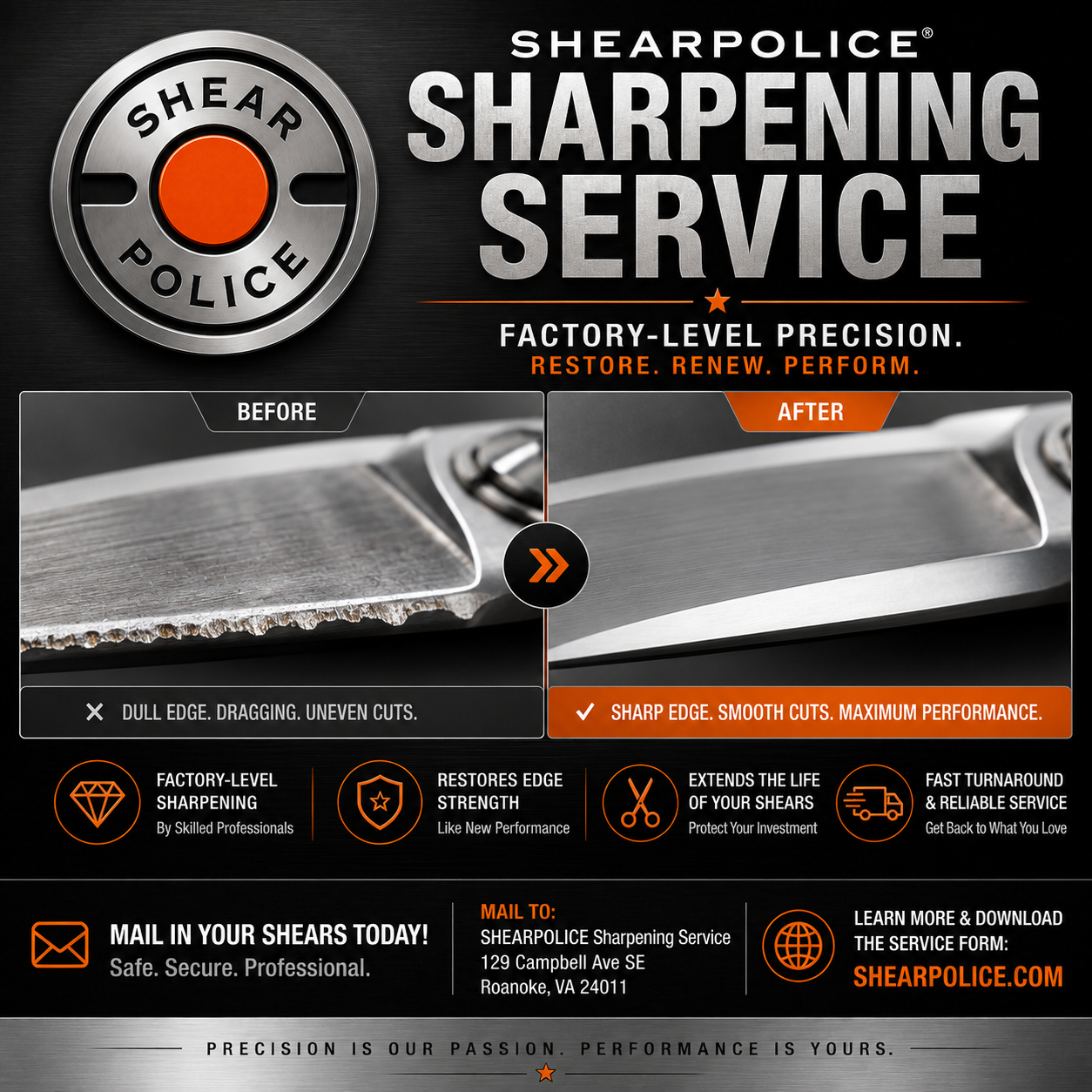
Need professional shear sharpening? Send Your Shears to SHEARPOLICE for Professional Sharpening & Service
How Much Should Professional Shears Cost?
Under $200
Suitable for:
-
Students
-
Beginners
-
Backup shears
$200 - $499
Suitable for:
-
Most professionals
-
Daily salon use
-
Excellent value
$500 - $1,200+
Suitable for:
-
Career professionals
-
Advanced cutting techniques
-
Premium craftsmanship
The best shear is not necessarily the most expensive one. The best shear is the one that fits your hand, supports your cutting style, and remains comfortable throughout your workday.
Frequently Asked Questions
What is the best size shear for hairstylists?
Most stylists prefer 5.75" to 6.0" because it provides an excellent balance of precision and efficiency.
What is the best size shear for barbers?
Most barbers prefer 6.5" to 7.0" shears for scissor-over-comb and larger cutting sections.
Are expensive shears worth it?
Premium shears often provide superior steel, craftsmanship, ergonomics, and edge retention. However, skill and technique remain more important than price alone.
How often should haircutting shears be sharpened?
The frequency of professional shear sharpening depends on how often the shears are used, how they are maintained, and changes in cutting performance. Many professionals have their shears serviced periodically, but cutting performance is usually a better indicator than following a fixed schedule.
Final Thoughts
Great haircutting begins with great fundamentals. Professional shears are simply the tools that allow those fundamentals to shine.
Choose shears based on comfort, ergonomics, craftsmanship, and how they support your cutting style—not simply based on price or marketing claims.
The right pair of professional haircutting shears can improve efficiency, reduce physical strain, and help you perform at your highest level for years to come.
At SHEARPOLICE, we believe professional tools should support professional results. Understanding what makes a quality shear is the first step toward making an informed investment in your craft, your clients, and your career.



Leave a comment
This site is protected by hCaptcha and the hCaptcha Privacy Policy and Terms of Service apply.