
Swivel Shears vs. Straight Shears: Which Should You Choose?
Walk into almost any professional beauty supply store today and you’ll notice more shears featuring a rotating thumb ring. Swivel shears, also known as rotating-thumb shears, have become increasingly popular with professional hairstylists and barbers because they offer a different approach to comfort, hand position, and freedom of movement while cutting.
But are swivel shears right for you?
The answer depends on your cutting style, the way the shear fits your hand, and how many hours you spend behind the chair. Understanding the differences between swivel shears and traditional straight shears can help you choose the professional haircutting shear that best supports your technique.
How Swivel Shears Work
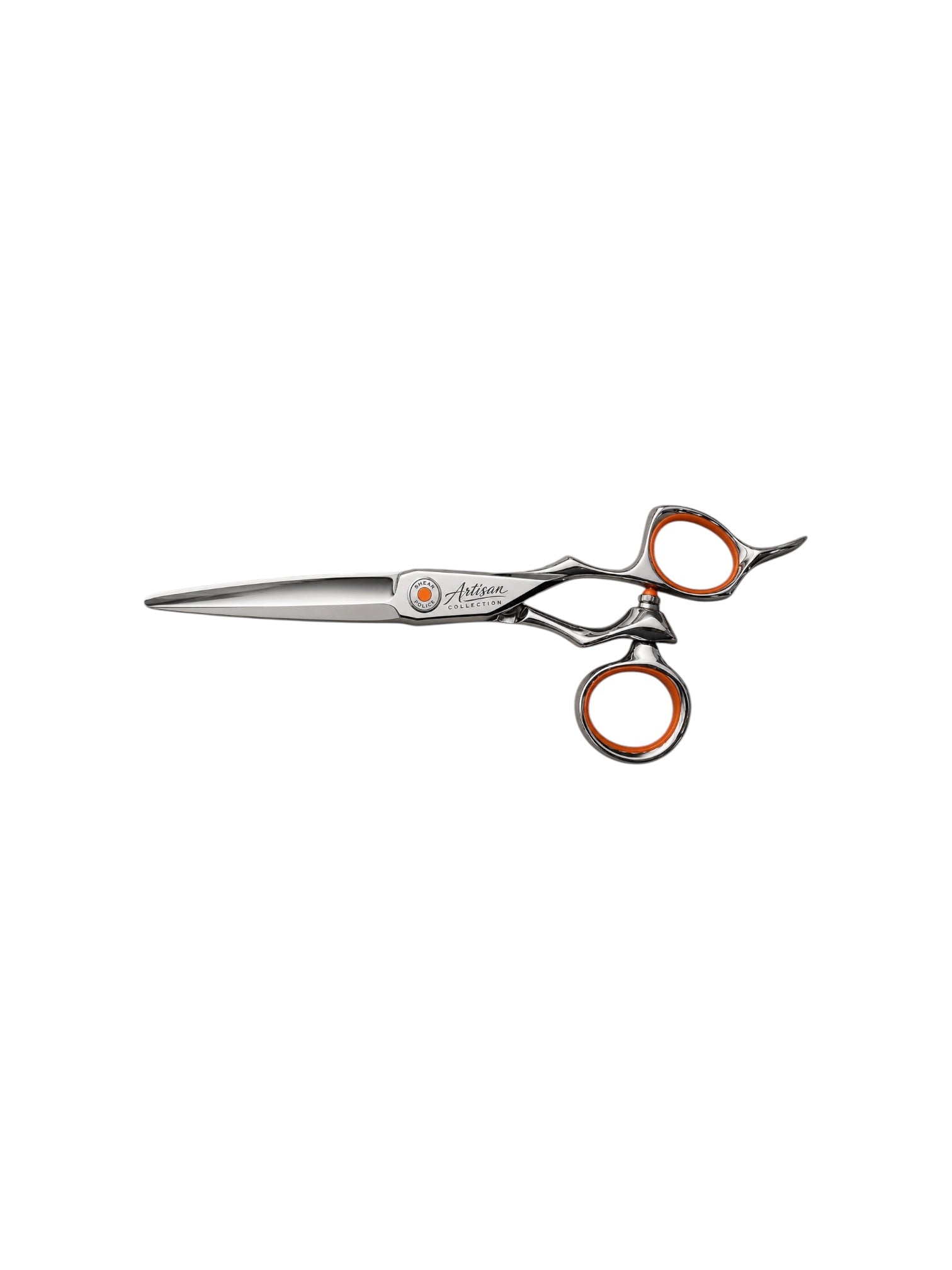
A swivel shear features a thumb ring that rotates independently from the rest of the handle. Depending on the design, this allows the thumb and hand to move more naturally through different cutting positions without requiring the stylist to maintain one fixed thumb angle.
Traditional straight or fixed-thumb shears keep the thumb ring in one position relative to the blade. For many stylists, this familiar design provides excellent control. However, certain cutting positions can require more wrist rotation or a higher elbow position.
A rotating-thumb design gives the stylist another option — allowing the hand to adjust as the shear moves through different cutting techniques.
The Ergonomic Advantage of Rotating-Thumb Shears
One of the primary reasons professional stylists choose rotating-thumb shears is comfort during long hours of haircutting.
A properly fitted rotating-thumb shear can encourage a more relaxed cutting position by allowing greater freedom of movement through the thumb, wrist, elbow, and shoulder.
Potential benefits include:
-
Lower elbow positioning — The rotating thumb can allow the elbow to remain lower during many cutting movements, which may help reduce shoulder fatigue.
-
More neutral wrist positioning — Greater thumb mobility can help reduce the amount of wrist rotation required during certain techniques.
-
Reduced thumb tension — The rotating ring allows the thumb to move with the hand rather than remaining locked into one position.
-
Reduced repetitive strain — Rotating-thumb shears are designed to support a more natural hand and wrist position, which may help reduce repetitive strain and fatigue during long hours of professional haircutting.
-
Greater freedom of movement — Stylists can move between different cutting angles without constantly repositioning the entire arm.
For hairstylists and barbers who perform multiple haircuts every day, small improvements in hand position and comfort can become increasingly important over the course of a career.
The Learning Curve: What to Expect
Moving from a traditional straight shear to a swivel or rotating-thumb shear can require an adjustment period.
Because the thumb is no longer locked into a fixed position, the shear may initially feel different from the tool you have used throughout your career.
You may notice:
-
Different hand positioning
-
Greater movement through the thumb
-
A tendency to rotate the thumb more than necessary
-
A different feel when performing highly detailed cutting techniques
The key is allowing your hand to adapt naturally.
Begin by using the rotating-thumb shear for techniques you already perform confidently. As your muscle memory adjusts, you can begin incorporating it into more detailed haircutting.
Techniques that can work particularly well with rotating-thumb shears include:
-
Point cutting
-
Slide cutting
-
Layering
-
Dry cutting
-
Wet cutting
-
Texturizing
-
Blending
Shear-over-comb and highly detailed precision work can also be performed with rotating-thumb shears, although some stylists prefer the familiar resistance and control of a traditional fixed-thumb handle for these techniques.
Who Should Consider Swivel Shears?
Rotating-thumb shears can be an excellent choice for professional hairstylists and barbers who:
-
Perform multiple haircuts throughout the day
-
Experience hand, wrist, elbow, or shoulder fatigue while cutting
-
Prefer a more relaxed cutting position
-
Use a variety of cutting angles and techniques
-
Frequently perform slide cutting, point cutting, layering, or dry cutting
-
Want greater freedom of movement from their cutting shear
-
Are looking for a more ergonomic approach to professional haircutting
Stylists who spend years behind the chair often become increasingly aware of how shear design affects their hands, wrists, elbows, and shoulders.
Choosing a shear that fits your hand and supports your natural cutting position can make a significant difference in everyday comfort.
Who May Prefer Straight Shears?
Traditional straight or fixed-thumb shears remain an excellent choice for many professional hairstylists and barbers.
You may prefer a straight shear if you:
-
Are learning foundational haircutting techniques
-
Prefer the familiar feel of a traditional shear
-
Want direct, predictable thumb control
-
Perform a large amount of precision cutting
-
Frequently use shear-over-comb techniques
-
Simply feel more comfortable with a fixed-thumb handle
Straight shears have been used to create exceptional professional haircuts for generations.
The decision between straight and rotating-thumb shears is not about one design being universally better than the other. It is about finding the handle configuration that works best with your hand, your technique, and the way you cut hair.
Rotating Thumb vs. Straight Handle: Which Gives More Control?
Control comes primarily from proper shear fit, blade design, balance, tension, and the skill of the stylist.
A traditional fixed-thumb shear creates a very direct connection between the hand and blade. Some stylists prefer this feeling during precision work.
A rotating-thumb shear allows the thumb to move independently, which can provide greater flexibility when changing cutting positions.
Neither design automatically creates a better haircut.
Professional stylists should choose the handle that allows them to maintain control while keeping their hand as relaxed and natural as possible.
Do Swivel Shears Cost More?
Rotating-thumb shears can sometimes cost more than comparable straight-handle models because the handle requires an additional rotating mechanism and more complex engineering.
However, handle design is only one factor that determines the price of a professional shear.
Other important factors include:
-
Steel quality
-
Blade design
-
Manufacturing process
-
Edge construction
-
Balance
-
Tension system
-
Handle design
-
Overall craftsmanship
A well-designed professional shear should be evaluated as a complete cutting tool rather than simply by whether the thumb rotates.
Sensei FIT Rotating-Thumb Shears
For stylists interested in experiencing the benefits of a rotating-thumb design, the Sensei FIT rotating-thumb collection offers professional cutting and seamless blending options designed around comfort, control, and natural hand movement.
The sculpted Sensei FIT handle is designed to follow the natural contours of the hand, while the rotating thumb allows additional freedom of movement through different cutting positions.
Sensei FIT rotating-thumb shears are made with Japanese molybdenum alloy steel and are designed for professional wet cutting, dry cutting, blending, texturizing, and everyday salon or barber work.
Explore Sensei FIT Rotating-Thumb Professional Shears to compare cutting and blending options.
The Bottom Line
Swivel shears are more than simply a different handle style. For many professional hairstylists and barbers, a rotating-thumb shear can provide greater freedom of movement and a more natural cutting position during long days behind the chair.
Straight shears remain an excellent choice for stylists who prefer traditional control and a fixed handle.
Ultimately, the best professional hair cutting shear is the one that fits your hand, supports your technique, and allows you to work comfortably and confidently.
At SHEARPOLICE®, we offer professional straight-handle and rotating-thumb shears from respected shear manufacturers, giving hairstylists and barbers the ability to choose the tool that best matches the way they work.
Whether you prefer the traditional control of a straight shear or the freedom of a rotating-thumb design, the goal is the same:
Better control. Better comfort. Better cutting.

Leave a comment
This site is protected by hCaptcha and the hCaptcha Privacy Policy and Terms of Service apply.