
Article: How to Choose Professional Hair Shears: A Stylist's Complete Buying Guide
How to Choose Professional Hair Shears: A Stylist's Complete Buying Guide
Choosing professional hair shears is one of the most important decisions a stylist makes — and one of the most misunderstood. Walk into any beauty supply store and you'll find dozens of options ranging from $50 to over $1,000. So what actually separates a great pair of shears from a mediocre one?
After 20+ years in the industry — and running a salon — I've seen firsthand how the right shears protect your body, elevate your work, and last a decade with proper care. The wrong ones? They'll slow you down, damage your clients' hair, and quietly destroy your wrists. Learn more about who we are and why we built SHEARPOLICE®, and why professionals trust us.
This guide covers everything you need to know before you buy.
1. Blade Length & Size: Finding Your Fit
Shear size is measured in inches from the tip of the blade to the end of the finger tang, typically ranging from 5.0" to 7.0" for professional use.
General guidelines by technique:
- 5.0"–5.5" — Detail work, point cutting, precision cuts; ideal for stylists with smaller hands
- 6.0"–6.5" — Versatile all-around length; suits most stylists and techniques
- 7.0"+ — Slide cutting, barbering, and bulk removal on longer hair
How to measure for your hand: Open your hand flat and measure from the tip of your middle finger to the base of your palm. That measurement in inches is a reliable starting point for shear length.
The goal is control — a shear that's too long for your hand forces you to overextend, increasing fatigue and reducing precision. Browse our full professional shear collection to compare sizes side by side.
2. Handedness: This Is Non-Negotiable
Left-handed stylists using right-handed shears is one of the most common — and damaging — mistakes in the industry.
Right-handed shears are designed so the top blade moves toward the stylist when cutting. When a left-handed stylist uses them, the blade pushes away, causing the hair to fold rather than cut cleanly. The result: damaged hair, frustrated clients, and significant strain on the wrist and elbow over time.
If you're left-handed, always buy shears specifically made for left-handed use. True left-handed shears are mirror-image designs — not simply reversed grips. Verify this before purchasing.
3. Steel Quality: What the Numbers Actually Mean
The steel used in professional shears determines edge retention, sharpness potential, corrosion resistance, and longevity. Japanese steel is the industry gold standard for a reason.
Key steel grades to know:
- Hitachi ATS-314 — One of the most respected alloys in professional shears. High chromium content for corrosion resistance; holds a razor-sharp convex edge exceptionally well.
- VG-10 — A premium stainless steel with added vanadium for toughness. Excellent edge retention and widely used in high-end shears.
- Cobalt alloys — Added cobalt increases hardness and wear resistance. Found in top-tier shears designed for heavy daily use.
- 440C stainless — A solid entry-level to mid-range option. Less edge retention than the above but more affordable and easier to sharpen.
Rockwell Hardness (HRC) is the scale used to measure steel hardness. Professional Japanese shears typically fall between 60–67 HRC. Higher HRC means a harder, sharper edge — but also a more brittle blade that requires careful handling.
German steel shears tend to run softer (56–58 HRC), making them more durable against drops but less capable of holding an ultra-fine convex edge.
4. Blade Type: Convex vs. Beveled Edge
The blade grind determines how the shear cuts and what techniques it performs best.
Convex edge (Japanese-style):
- Razor-sharp, smooth cutting action
- Ideal for slide cutting, precision work, and dry cutting
- Requires a skilled sharpener to maintain properly — see our professional shear sharpening service
- Found on virtually all high-end Japanese shears
Beveled edge (German-style):
- Slightly serrated micro-edge that grips the hair
- More forgiving for wet cutting and blunt cuts
- Easier and cheaper to sharpen
- More common on entry-level and mid-range shears
For most professional stylists investing in quality shears, convex is the standard. The cutting experience is noticeably smoother, and clients feel the difference.
5. Handle Style: Ergonomics Matter More Than You Think
Handle design directly affects your wrist angle, elbow position, and long-term joint health. There are three primary styles:
Opposing (even) handle:
- Both finger holes are aligned symmetrically
- Traditional design; requires higher elbow elevation
- Less ergonomic for extended use
Offset handle:
- The thumb ring is set lower than the finger ring
- Allows a more natural wrist position and lower elbow
- The most common professional choice today
Crane handle:
- The most extreme offset; thumb ring drops significantly lower
- Maximum ergonomic benefit; lowest elbow position
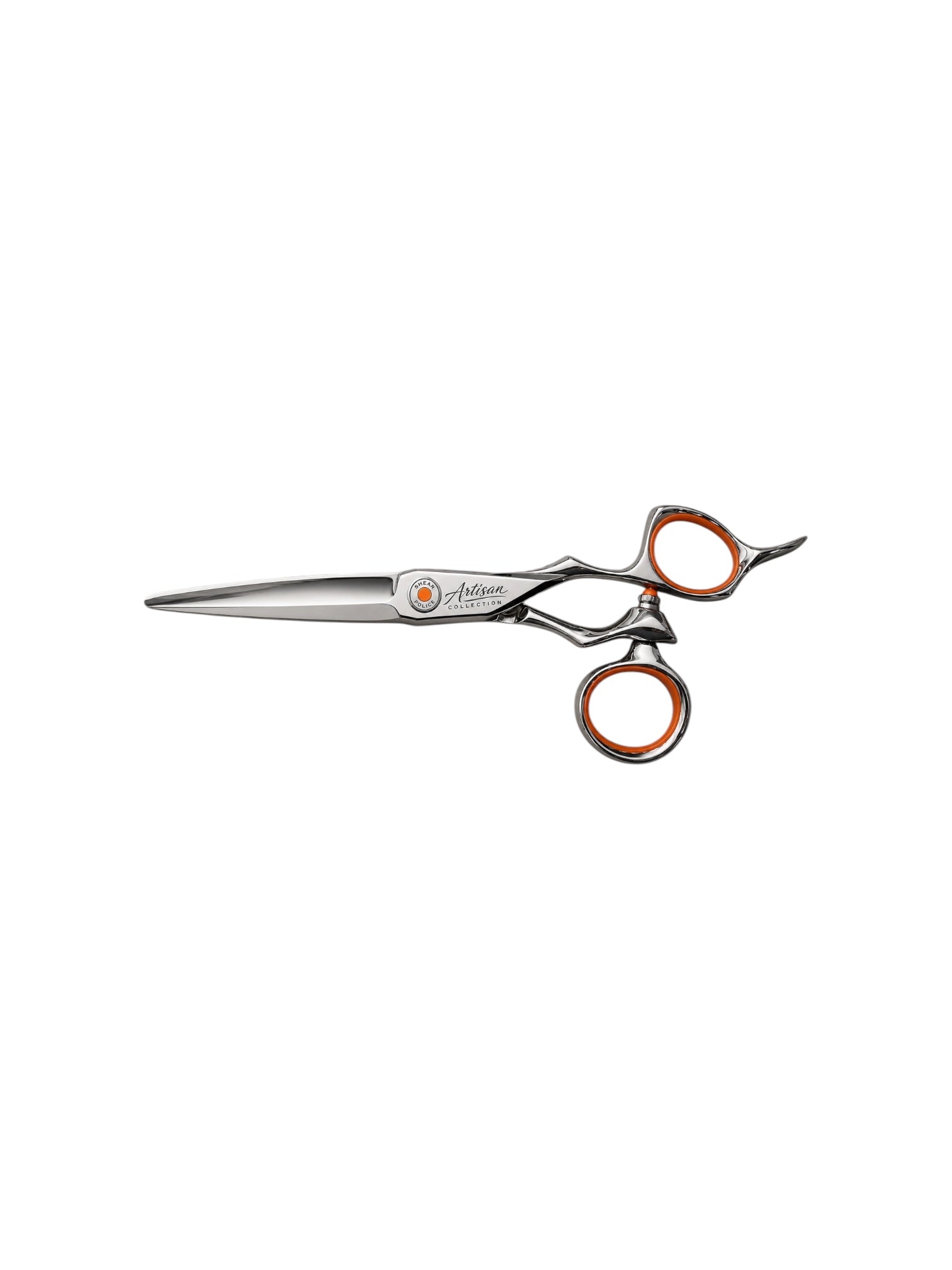
- Ideal for stylists with existing wrist or shoulder issues — explore our swivel shear collection for maximum ergonomic benefit
If you're cutting 6–8 hours a day, handle ergonomics aren't a luxury — they're injury prevention.
6. Price vs. Value: What You Actually Get at Each Tier
Professional shears span a wide price range, and the differences are real.
$150–$300 — Entry Professional
Solid Japanese or German steel, decent edge retention, basic ergonomics. A good starting point for newer stylists or a reliable backup pair. Browse our Classic Series for dependable entry-level options.
$300–$600 — Mid-Range Professional
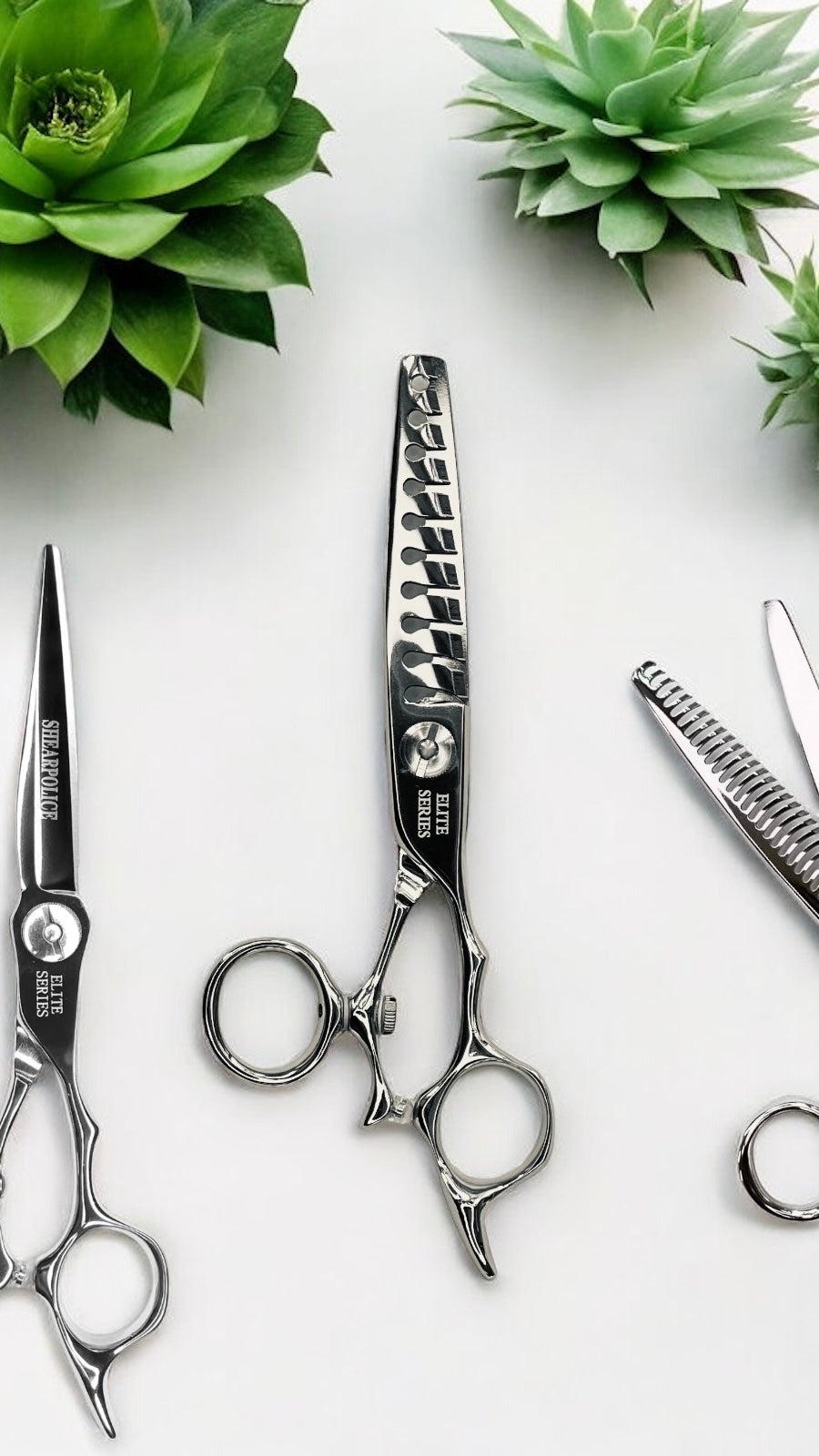
Premium Japanese steel (ATS-314, VG-10), refined convex edges, better balance and weight distribution. This is where most working stylists find their sweet spot. Explore the Elite Series and Elite Ergo Series.
$600–$900 — High-End Professional
Hand-finished blades, tighter tolerances, superior steel alloys, often with lifetime sharpening programs. Built for daily professional use over many years. See the Kyoto Shears collection.
$900–$1,350+ — Artisan / Collector Grade
Hand-forged by master craftsmen, often in limited runs. Exceptional balance, bespoke fit, and heirloom-level longevity. Our Artisan Collection and Mizutani Schorem shears operate at this tier.
The math: A $1,000 pair of shears used daily for 10 years costs less per day than a $200 pair replaced every 18 months — and your hands will thank you.
The Bottom Line
The right shears fit your hand, match your dominant hand, use quality steel, and support your cutting technique without fighting your body. Don't buy based on price alone — buy based on fit, steel, and ergonomics.
At SHEARPOLICE®, every shear in our collection is curated by working professionals who use these tools daily. Browse our full shear collection, or visit our shears overview page to find your match by style and budget.
Have questions about which shears are right for you? Reach out — we're stylists too, and we're happy to help.

Leave a comment
This site is protected by hCaptcha and the hCaptcha Privacy Policy and Terms of Service apply.